Key Takeaways
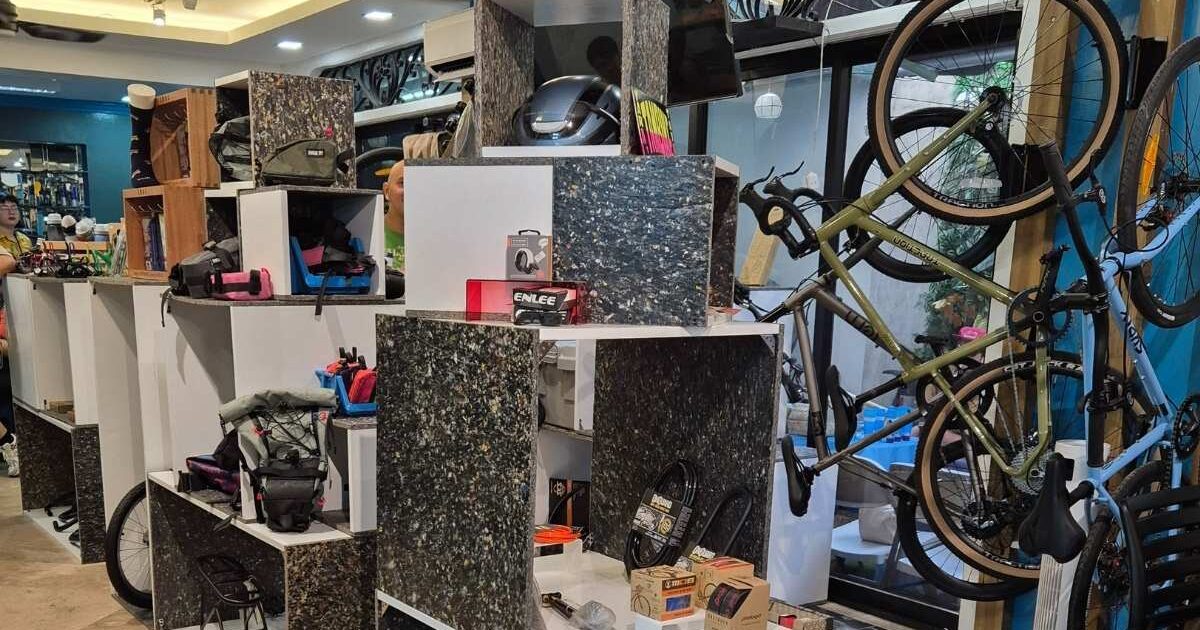
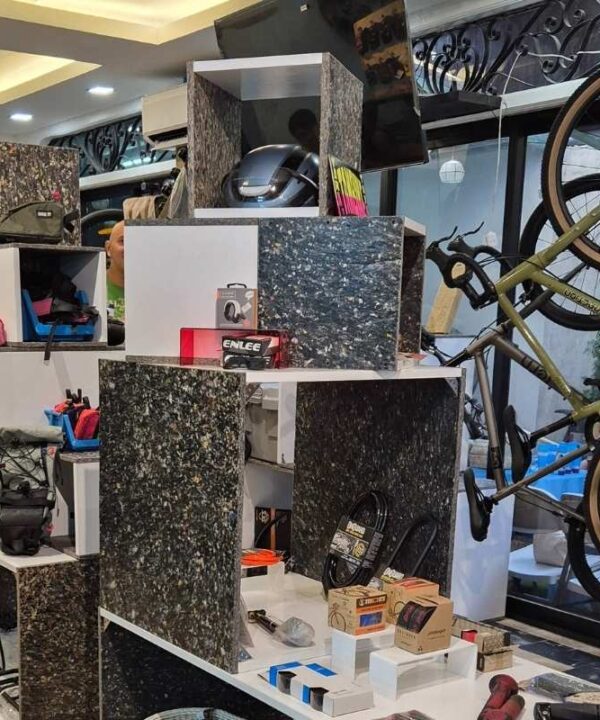
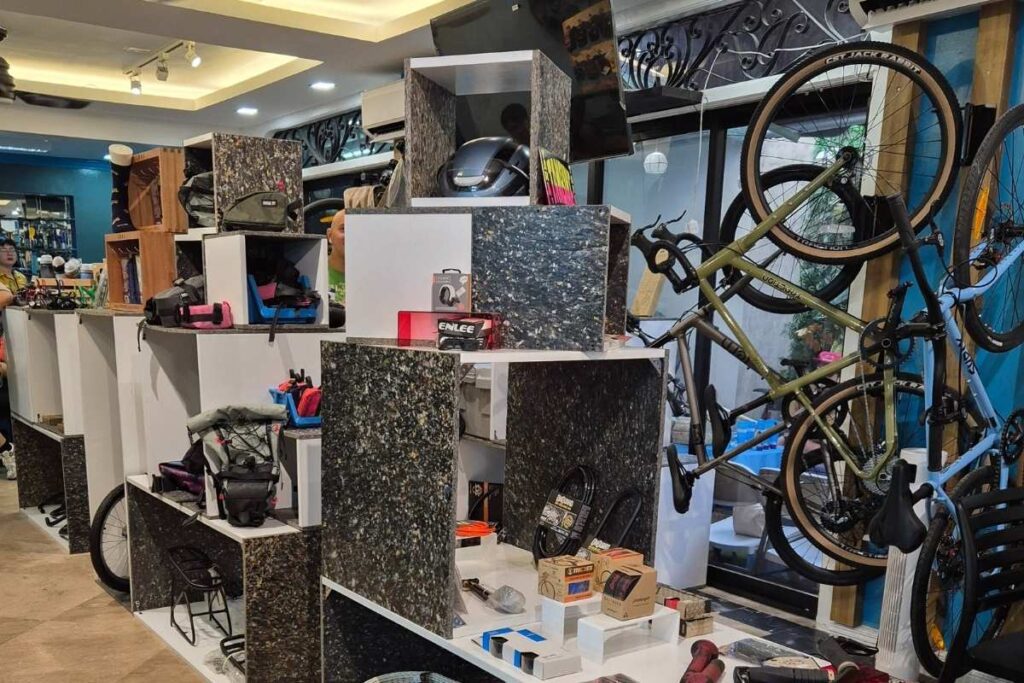
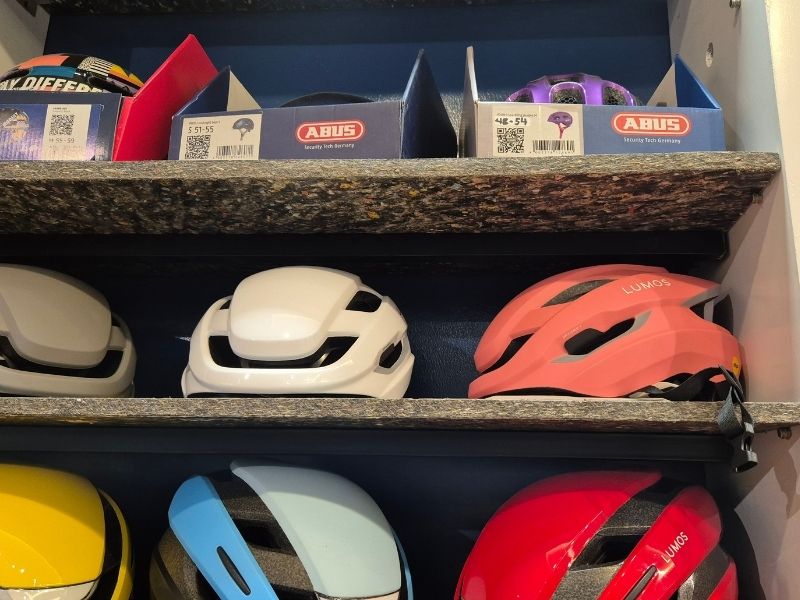
- RiverRecycle Boards, manufactured from post-consumer plastic intercepted from Philippine rivers, are installed as shelving and display units at Tambay Cycling Hub, Kapitolyo, Pasig.
- 26 Recycled plastic boards (12 mm) form part of the primary shelving structure, used alongside plywood.
- The material is waterproof, splinter-free, and requires zero maintenance — properties that are expected to outperform timber over a longer product lifecycle in humid conditions.
- Tambay is one of the first public-facing installations of RiverRecycle Boards in the Philippines: a live demonstration site for retailers, architects, and fit-out contractors evaluating circular materials.
- The supply chain is fully traceable: plastic collected from the Pasig River in Manila and rivers in Cebu, processed locally into construction-grade panels.
The Sourcing Problem in a Plastic-Polluted Market
The Philippines is among the world’s top contributors to ocean-bound plastic. The Pasig River, running through Metro Manila, is among the most plastic-polluted waterways in Southeast Asia. Approximately 80% of ocean plastic enters through rivers. In this context, specifying conventional materials carries a cost that does not appear on any invoice: materials with no connection to the pollution your operations sit alongside.
For retailers, architects, and fit-out contractors working in the Philippines, this creates a sourcing gap. Circular materials that are verified, traceable, and manufactured from recovered waste remain rare. Most products marketed as “sustainable” lack documentation. Supply chains are opaque. Post-consumer recycled content claims go unverified.
RiverRecycle Boards occupy a different category.
The Client: Tambay Cycling Hub
Tambay Cycling Hub was founded by Kevin Skinker in 2022 in Kapitolyo, Pasig, metres from the Pasig River. The shop was built from the start as a community space. Its name, “Tambay,” translates as “to hang out.” Its slogan, “Tambike Tayo” (let’s hang out and bike together), reflects an operating philosophy rooted in community access, environmental advocacy, and human-centred urban living. From its grand opening through programmes like the pay-what-you-can Community Parts Bin, Tambay has consistently structured its operations around the values its customers hold.
When the shop relocated to its new space at 93 East Capitol St., the fit-out decision became a values decision.
The team needed shelving capable of handling a high-traffic, tool-heavy environment: load-bearing, moisture-resistant, durable under the weight of bike helmets, tools, boxed accessories, and daily footfall from a loyal urban cycling community. But using generic timber would create a visible disconnect between the shop’s stated identity and its physical infrastructure. In a city where river plastic is a visible, daily reality, that disconnect was not acceptable.
The brief: a material that performs and means something.
The Solution: RiverRecycle Boards
RiverRecycle’s recycled plastic boards are manufactured from low-value mixed plastic waste, including multi-layer packaging, bags, and wrappers. These are the streams that conventional recycling cannot process. In the Philippines, this feedstock is intercepted from the Pasig River in Manila and rivers in Cebu before it reaches Manila Bay. It is sorted, shredded, washed, and hot-pressed locally into construction-grade panels.
The process is mechanical. No chemical additives in manufacturing or installation. The output is a dense, waterproof board made with 100% recycled content and a fully documented chain of custody from the collection point to the finished panel.
| Stage | What Happens |
| Collection | Plastic intercepted from rivers and riverine communities before ocean entry |
| Processing | Sorted, shredded, and washed on-site |
| Manufacturing | Hot-pressed into structural-grade panels, locally |
| Supply | Delivered to specification across multiple thicknesses |
For a shop located a few hundred metres from the river that provides the feedstock, the supply chain does not get any more direct.
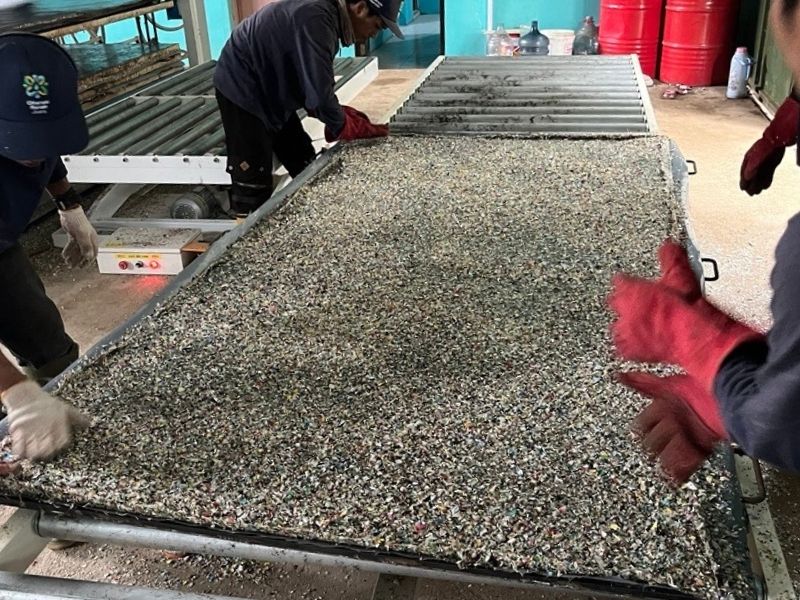
The Installation: 26 Recycled Plastic Boards
26 recycled plastic boards were installed as part of the shelving and product display structure at Tambay’s new location, used alongside plywood. They carry bike helmets, accessories, tools, and boxed products through the demands of a working retail environment in Metro Manila’s climate.
Functionally, they do the same job as timber in this application. Over a longer horizon, the material properties suggest a lower total cost of ownership in humid conditions, outperforming plywood in the following 10 years.
| Performance Factor | Timber | RiverRecycle Board |
| Moisture damage | High: warps in humid conditions | Zero: 0.15% water absorption (ASTM D570-22) |
| Biological degradation | Yes: mould, pests, bacteria | None: non-decomposing polymer base |
| Maintenance | Periodic sanding, sealing, and treating | None: cleaned with water and cloth |
| Splinter risk | Yes: degrades over time | None |
| Callback risk | High in humid, high-traffic environments | Lower expected callback risk in humid conditions |
For a shop operating year-round in Metro Manila’s conditions, the material case for timber is weak on paper. RiverRecycle Boards are expected to reduce the main cost vectors associated with wood in this context, including retreating cycles, rot and mould callbacks, and replacement schedules, though the Tambay installation is the live test of those properties in a real environment.
The Chain of Custody
This is the commercial argument that procurement and sustainability teams need.
RiverRecycle’s Philippine operations collect plastic from the Pasig River in Manila, one of the highest-priority interception points in Southeast Asia, and from rivers in Cebu, including through operations with Prime Infra. The Pasig River operation collects between 1,500 and 5,000 kg of waste per day. Across Philippine sites in 2025, cumulative collection exceeded 1 million kg.
Each step in the supply chain is documented: collection site, material category, weight, and date. This is not a marketing claim. It is a transaction-level record available for a chain-of-custody audit.
For procurement teams under pressure to evidence post-consumer recycled content in their material supply chain, this is a direct, auditable route. The Tambay installation is proof that the supply chain is operational, that the material is available, and that the product performs under real conditions in a live retail environment.
Why Tambay Is a Demonstration Project, Not a One-Off
RiverRecycle does not position the Tambay project as an isolated outcome. It is the first publicly visible application of RiverRecycle Boards in the Philippine retail sector, and a live demonstration that circular materials perform in demanding commercial environments.
For municipalities and developers evaluating circular materials for public infrastructure, the Tambay installation provides evidence unavailable in a specification sheet: a product in active use, under load, in a real commercial setting, in Metro Manila. Customers who walk into the shop are directly interacting with the circular economy, not just reading about it.
The replication logic is straightforward. The 12 mm board specification that works for load-bearing shelving in Kapitolyo applies equally to outdoor benches, kiosks, signage panels, interior partitions, and concrete formwork.
The Tambay project is what that looks like in practice: a business that integrated circular materials into core operations without compromising on performance or lead time, in a city where the environmental stakes are visible from the shop window.
Specification at a Glance
| Property | RiverRecycle Boards |
| Feedstock | 100% recycled mixed plastic |
| Process | Mechanical recycling, hot press |
| Water absorption | 0.15% (ASTM D570-22) |
| Flexural strength | 17.001 MPa (ASTM D790-17) |
| Impact strength | 642.06 J/m (ASTM D256-10) |
| Compressive strength | 18.691 MPa (ASTM D695) |
| Surface | Waterproof, splinter-free |
| Maintenance | Zero: no sealing, treating, or refinishing |
Ready to Spec?
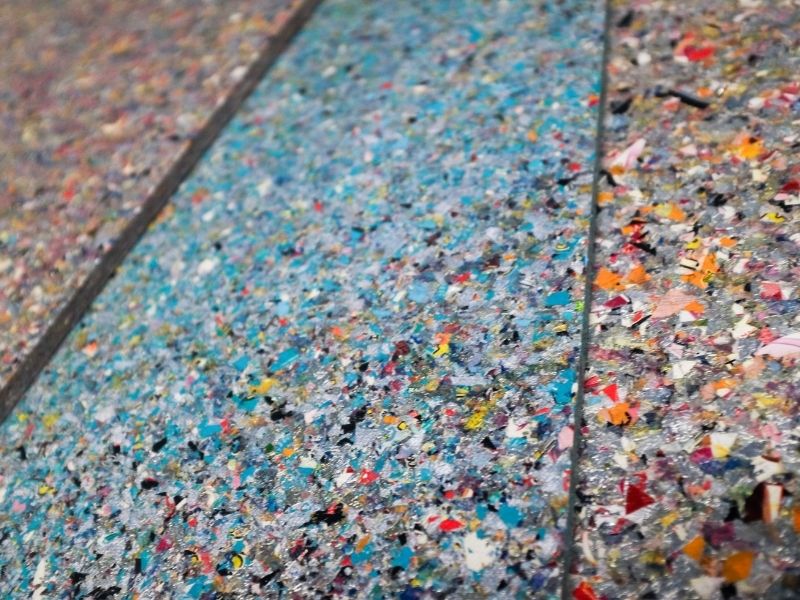
Download the full Technical Data Sheet or contact the boards team to request a sample for your next project.
rrboards@riverrecycle.com · www.riverrecycle.com